
Coupled with his own experience, Fr. Andrew Camilleri, a focolarino from Malta, shared how the Focolare Movement engages in the social field at the Humanitarian Forum and Fair 2023 held on June 24, 2023, at the Catholic Junior College Peforming Arts Center in Singapore.
The Past and the Future
Years ago, I watched “Homerun,” a film produced here in Singapore. I was deeply impressed by the ending with its message: the brother and the sister finally got a pair of new shoes each, only to find themselves in front of a muddy and rugged road. The past has not been easy; the future is equally challenging.
Your experience as a country is a showcase of poverty alleviation. There are public policies on the macro level, as well as on the micro level, manifesting the enterprising spirit and hard-working ethos of the people.
Now with your humanitarian outreach initiatives, you are sharing your richness, in all senses (material, moral and spiritual), beyond your national borders, to make a more equitable world, to help meet the most important human right – the right to life, to food, to proper nutrition… In the discourse on human rights, I was impressed by one value that is quite common among Asian cultures. Besides individual rights, there are the rights of the people or community, simply put, the common good. Both are important.
The topic given to me is: To listen to “the cry of the poor and the cry of the earth,” and I added, in God’s style with loving closeness.
What I wish to offer here in my short intervention is a value-added attitude ingrained in the spirituality of unity of the Focolare Movement that has accompanied me and many others in the social and humanitarian outreach initiatives and programs we are involved in. We hope all these efforts express “God’s style” of love towards neighbors in need, as Pope Francis said: “God’s style is never distant, detached or indifferent. On the contrary, it is a style of proximity, compassion, and tenderness. This is God’s style: closeness, compassion, and tender love.” [1] He also says that the concern of believers cannot be limited to a kind of assistance – as useful and as providential as it may be in the beginning – but requires a “loving attentiveness” (Apostolic Exhortation Evangelii Gaudium, n. 199) which honors the person as such and seeks out his best interests.
This is also the way the Focolare Movement engages in the social field:
· Our aim is to contribute towards a more united world, a universal fraternity based on Jesus’ testament “that all may be one”;
· Our method is the Art of Loving, the secret of human fulfillment found in divine love, and an art that brings us close to each neighbor, especially those in need;
· Our spirit is (reciprocal or Trinitarian love) that renders Christ alive in our hearts and among us through living the Word of God.
Not Theories but Practices
After completing higher studies at De La Salle College, I got a degree in Mechanical Engineering specializing in Aircraft Engineering at the University of Malta. Amid different proposals coming from the UK and the USA, I admit to being fascinated by the prospect of engaging in a lifelong project on airframe and aircraft engine research. Later on, this promising career lost its appeal because I was ardently involved with the young people of the Focolare Movement, the Gen, which stands for ‘New Generation.’ They put in common whatever they could share, imitating the early Christian communities in being really “one heart and mind” and “putting everything they had in common.”
A Foretaste of What Is to Come
I also felt a strong urge to do the same. And so it was! Little by little, I started to know the spirituality of unity of the Focolare, and the aspect which struck me most in this new life is the sharing of material and spiritual goods. I had lots of things to share apart from time and talents: clothes, pocket money, books… and most of all, my expensive new stereo which I was attached to. However, something prompted me to share it with others, and so, I called up one of the Gen to see whether it would be a good idea to put in common this stereo for our meetings, and he was very happy. So I brought it along and placed it in our meeting room. Some days after, something incredible took place: I received another new stereo! There I realized that the words of the Gospel: “give and it will be given to you” are true!
Of course, this was just the beginning of an adventure that was awaiting me. As Gen, Chiara Lubich, the founder of the Focolare, opened our hearts in a concrete way, to think beyond the frontiers of our own countries and pursue a greater goal, the very testament of Jesus: “that all may be one.” This desire to build a united world was a strong contrast to the division of the world in those years of the Cold War, but we were so convinced that unity was possible!
In the 1970s, Chiara launched “Operation Africa” to the young people of the Movement. It aimed at raising money to build a hospital to save the Bangwa tribe in West Cameroon. The tribe was suffering from the “sleeping sickness” and had a very high mortality rate thus risking extinction. With time, Operation Africa gave rise to schools and livelihood projects, developing into a little town. In the 1980s, Chiara launched another project called “Operation Asia” to build Mariapolis Peace, a little town in Tagaytay, where I currently live. This little town offers a permanent spiritual and social formation for around 300 young people every year through its permanent formation schools, its social centers, and the School of Dialogue with Oriental Religions (SOR).
The young people of the Focolare worked hard to raise funds for these two Operations: through sales of scrap materials, concerts, etc. to meet the target quota of the year. I remember how tough it was to convince our peers who criticized these fundraising activities, saying that we should not carry the burden of these countries as it is their poor governance that brought about the unequal distribution of wealth and their demographic problems. But for me, we gained an added value in all that we were building: “a more united world, a world where we recognize each other as brothers and sisters.”
A Personal Game-Changer
As a Gen, I went through a series of intense events. Not only did I find new meaning in my life, I also felt that Jesus was calling me to follow him through the way of the Focolare: a call to love, to serve humanity, and to build a more united world to fulfill Jesus’s prayer: “that all may be one.”
After a period of formation at the Focolare Formation Center near Florence (Italy), I spent my early years as a focolarino in a predominantly Muslim country. Since I could not work in my profession, I took a job in the administration section of an embassy that could guarantee me a visa. It was my first immersion in the Asian continent with its multiplicity of cultures and religions, in particular, with Muslim faithful in a subcontinental environment. While experiencing an immense enrichment, I also realized that the Gospel message is universal, and I could live it anywhere.
After some years, I became very much involved in the renovation and running of the prestigious Mission High School founded by the Belgian Franciscan Fathers in the late 1800s. I was able to involve myself also in relationships at the grassroots level – what was most precious as a witness was the harmonious collaboration among the Christian and Muslim teachers and construction workers. It all stemmed from a value-added attitude in the Art of Loving inculcated in the school among the children and staff, a way to live the universal message of the Gospel by putting love at the base of relationships: loving everyone, being the first to love, loving the other as oneself, and loving one’s enemy.
I remember one particular anecdote when a boy in this school hurt his eye in a fight with another boy after classes. When he reached home, he went straight to bed so that his mom wouldn’t notice him. At dinner time, when his mom saw him, she was alarmed by the bleeding in his eye! After his mom asked him for an explanation, he admitted that he had fought with another boy who had accidentally poked him in the eye. The next day, the mother went straight to the principal to request that the other boy be punished. But her son immediately reacted to her saying that he had already forgiven the boy because the phrase of the Art of Loving that week was “love your enemy.” The mother was astonished and said to the principal how happy she was that her child was being formed in Muslim values much better than what they could do at home!
Subsequently, I spent five years at Mariapolis Peace in Tagaytay (Philippines), and during this period, I was engaged in the formation of youth in search of their calling in life. Even here, the birth of a social center was a result of the Art of Loving lived out.
Ronald Manguiat was a local boy, belonging to a very poor and numerous family. He was perhaps ten years old when I first met him at our weekly meeting with about a hundred young people from the neighborhood. At these meetings, we offered catechesis, games, and an abundant snack. Once, while I was playing with the boys, I noticed that there was one standing by himself. I invited him to join but one of the boys told me he was blind. So, I approached him and saw that he was blind in one eye while with his other eye, he could only see shadows.
With his parents’ permission, Ronald was treated by a specialist in Manila. His shrunken damaged eye was replaced with a prosthetic one, thus protecting it from harmful external agents. Vision in his other eye could not be restored due to irreversible damage to the optic nerve.
Through the many relationships with doctors and specialists during medical visits with Ronald, we managed to enroll him in a boarding school for blind boys where he could attend primary school and then secondary school using the Braille system.
After this experience with Ronald, we started the Pag-asa (Hope) Social Center to be a beacon of hope for economically disadvantaged children and their families. Pag-asa is now on its 26th year of operation, with around 300 beneficiary families.
The last time I met Ronald, he was a man in his thirties, married with children. He wanted to see me to express his gratitude. In all those years, his commitment to the spirituality of unity of the Focolare Movement inspired him to live the words of the Gospel, and he, in turn, started to assist the poor through his profession, fighting for their rights. In fact, with great satisfaction, he told me how happy he was to be of service to farming families.
Freely We Receive, Freely We Give
Today, besides Pag-asa Social Center, we have Bukas Palad (Open Hands) Social Center present in different cities of the Philippines. It lays emphasis on the education of children and young people from indigent families besides skills training for adults. We also have the Focolare Carpentry Training Center which trains out-of-school youth who have no means of sustenance and Sinag (Ray of Light) through which the Volunteers of the Movement provide medical and human assistance to those from the poorest backgrounds. Through value formation, the families assisted are now protagonists in their own environments. Many are an integral part of the family of the Focolare Movement with roles of leadership. This is a witness to the radical transformation of society, and the way we as a Movement respond to the cry of the poor through loving closeness, and returning to them their dignity through the opportunities offered to them.
Dawn of a New Integral Economic Order
Our efforts in helping those in need had taken a new dimension when our founder, Chiara Lubich, visited São Paulo, Brazil in 1991. She launched the Economy of Communion (EoC), an intuition she had there of involving as many entrepreneurs as possible to conduct their economic activities in the spirit of communion.
Simply put, the profits are shared to achieve three main goals:
1) to make the business grow by recapitalizing;
2) to contribute to the development (particularly in formation) of a culture of giving;
3) to directly help whoever is in need.
Perhaps many of us will not be able to produce wealth or create jobs, but what we can certainly do is put ourselves in communion, which generates an awareness that all that I am has been given to me; likewise, all that I have must, in turn, be given. This prompts us to free ourselves of goods as absolute possessions in order to make them gifts, and thus, to be free to love.
So the Economy of Communion fights against misery and indigence, but it fights it by proposing for all an evangelical style of life, moderate and sober. We can be part of the Church Pope Francis envisions: a Church that is poor, and for the poor.
At the Y4UW International Secretariat
My involvement in the Focolare Movement gave me the opportunity to work for many years with enthusiastic young people who adhere to the goal of a united world through various projects at the secretariat of the Youth for a United World (Y4UW) in Rome.
Chiara Lubich opened our hearts to the epitome of suffering, the moment when Jesus on the cross cried out: “My God, my God, why have you forsaken me.” In this suffering, all other sufferings find meaning: personal suffering, the suffering of humanity, and the very suffering of our “common home” – our planet Earth. She invited us to overcome these sufferings with love, by not running away from them but embracing them and by offering solace and concrete action to the victims of human and environmental tragedies. This took shape in a slogan among the young people to look out for the “daily Jesus Forsaken.”
· Earthquake in Aquila (Italy) – Our youth had a fervent desire to assist the victims by providing food, medicine, and clothing. *Experience: Though our young people were not so happy to fill up forms for the victims, it turned out to be an excellent opportunity to build relationships.
· Experience in Hungary-Slovakia – Despite the political tension, our youth from the two countries organized an event with civil authorities of Esztergom (Hungary) and Štúrovo (Slovakia) which became a bridge, a symbol of brotherhood among Hungarians and Slovaks.
These are just two concrete examples that young people would remember for a lifetime.
Listening to the Cry of the Earth with Loving Attentiveness
To listen to the cry of the Earth also requires recognition of our interconnectedness and listening with loving attentiveness to the vulnerable communities, who are our brothers and sisters.
There have been numerous initiatives in the Focolare on different levels to generate awareness on protecting “our common home.”
During my seven-year tenure as the Focolare’s Councilor for Oceania, I had the opportunity to be involved in creating greater sensibility towards the environment and consciousness of the impact of climate change on the inhabitants of Kiribati, Wallis and Futuna.
– Educating and spreading awareness on the effects of rising sea levels on territories and populations
In the Focolare, we have recently created an umbrella project called EcoPlan that encompasses our different initiatives. Through EcoPlan, the Focolare tries to extend, connect together and expand the environmental work already existing in the Movement to help the local communities develop ecological plans suited to their environment and culture. Ecological conversion was one of the goals set by the Focolare Movement in the 2021 General Assembly.
Focolare Eco-Farm, Thanks to CHARIS
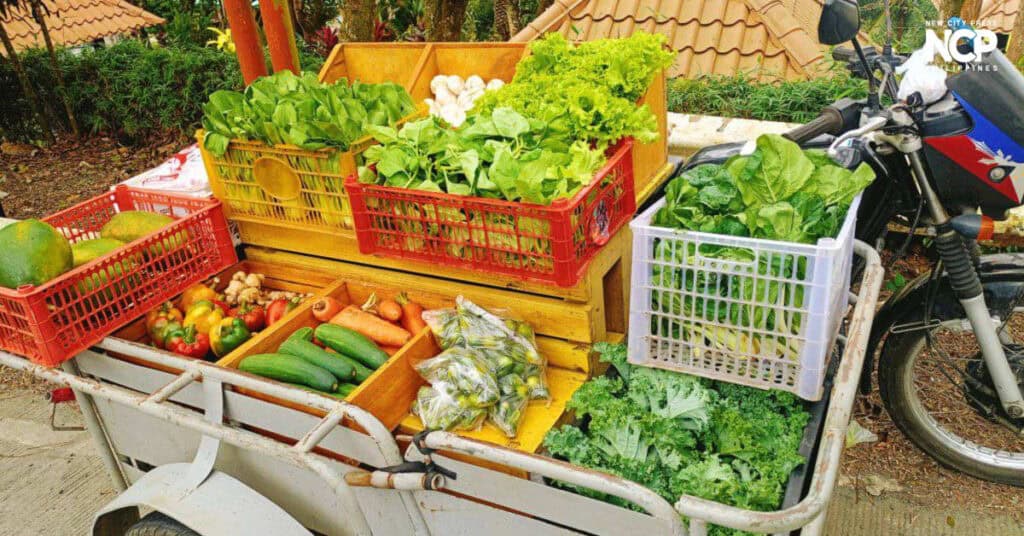
One such project is the Focolare Eco-Farm, in Tagaytay (Philippines), which is sustained by the generous contribution of CHARIS (Caritas Humanitarian Aid & Relief Initiatives Singapore) to which I want to express our most sincere gratitude.
To conclude, I would like to make Pope Francis’ invitation our own ̶ to work for “a culture of encounter” “as Jesus did”:
· not just seeing, but looking;
· not just hearing, but listening;
· not just passing people by, but stopping to be with them;
· not just saying “What a shame, poor people!” but allowing ourselves to be moved with compassion;
· “and then to draw near, to touch and to say: ‘Do not weep’ and to give, at least, a drop of life.”
Let our initiatives be the result of the value-added attitude of closeness, compassion and loving attentiveness to each person we meet or assist.
Andrew Camilleri
[1] Pope Francis, Greeting to the “Catholic Extension Society,” Vatican, April 26, 2023.