
Community‑based partnerships are seen as a boost in addressing the educational challenges besetting our country. Romeo P. Vital gives us an example of this collaborative spirit in the network of friends, donors, and small organizations that have worked together for Dacu Integrated School in Mobo, Masbate.
The Philippines today faces a constellation of social challenges that weigh heavily on its people — poverty and inequality, corruption, gaps in health care, substance abuse affecting countless individuals, young and adult, and violence against vulnerable women and children. These issues do not exist in isolation; they weaken the social fabric and slow the nation’s progress. While the government has introduced policies to address them, implementation remains uneven. Civil society organizations continue to fill the gaps, supporting vulnerable communities where public systems fall short. Among these concerns, one issue stands out for its long-term impact on the country’s future: education inequity.
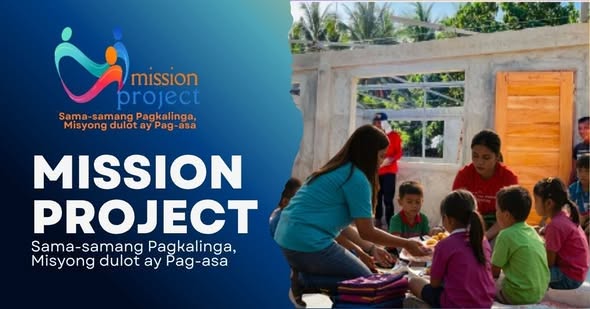
The recent findings of EdCom II, the Second Congressional Commission on Education, have made this crisis impossible to ignore. Their report, “Fixing the Foundations: A Matter of National Survival,” raised the alarm on the most urgent barriers to overcoming the learning crisis: the fragile state of early childhood education, inadequate nutrition in the first four years of life, and the failure to ensure that every Filipino child attains basic literacy by Grade 3. These foundational gaps shape a child’s entire educational journey and, ultimately, the country’s future workforce.

EdCom II’s study confirms what many Filipino families already experience: students struggle with basic literacy and numeracy, teachers are overburdened, classrooms are overcrowded, and resources are unevenly distributed across regions. The report highlights a troubling reality — a child’s opportunities in life are still shaped by geography and economic status. Adding to this challenge is the absence of parents during children’s formative school years, especially in communities where most parents work as farmers, fishermen, or in various forms of domestic and informal labor. These livelihoods often demand long hours away from home or seasonal migration, leaving children in the care of relatives such as grandparents. Without consistent guidance or support with schoolwork, many students struggle to stay motivated, keep up academically, or remain in school — patterns that EdCom II identifies as major contributors to poor learning outcomes and higher dropout rates.
These challenges are especially visible in rural and coastal communities. Schools in far‑flung islands often operate with minimal support, outdated materials, and unsafe facilities. When natural disasters strike, these schools are among the first to be damaged and the last to be repaired. Education inequity becomes not only a policy issue but a question of fairness and national responsibility.
Yet EdCom II does more than diagnose the problem — it points toward solutions. It calls for stronger teacher support, better resource allocation, modernized curricula, and disaster‑resilient school infrastructure. It emphasizes the need for community‑based partnerships, recognizing that government alone cannot address the crisis. Local initiatives, civic groups, and private individuals all have a role to play in ensuring that no child is left behind.

One example of this collaborative spirit is the work currently underway in Dacu Integrated School, located in Mobo, Masbate, a coastal municipality 554 kilometers southeast of Manila. Most of its students come from poor families, many with parents working far from home. Over the past year, a network of friends, donors, and small organizations has been established after I shared the school’s situation with people who were willing to listen. Together, we were able to repair classrooms, provide learning materials, and supply chairs and tables for the youngest pupils. A simple appeal set off an unexpected chain of generosity: 1,700 books were donated, a small computer laboratory was established, and sports equipment and musical instruments arrived soon after. When Typhoon Opong devastated the school in September 2025, this same network mobilized again. A community‑led fund drive helped restore damaged classrooms and begin the construction of two new ones, while the TLE laboratory is now under construction. We are also laying the groundwork for a future school library, which we hope will become a safe and inspiring space for students who have had limited access to books and learning resources.

These efforts may seem modest compared to the scale of the national crisis, but they demonstrate what is possible when communities refuse to look away. They echo EdCom II’s call for an education system strengthened not only by policy but by shared responsibility, creativity, and genuine concern for the next generation.
The Philippines stands at a crossroads. If we take EdCom’s findings seriously and support local initiatives like those in Dacu Integrated School, we can help build an education system that gives every Filipino child — not just the privileged few — a fair chance at a better future.
Romeo P. Vital